Side projects, mostly built by AI agents. Games, apps, whatever I feel like building.
01 / why
Why this exists
About 95% of my time goes to my day job: founder & CTO, building an agentic business bank. We use
agents there too, but with a lot of guardrails (for good reasons). A bug in a bank is, well, a problem.
So I wanted a playground with way more degrees of freedom. What happens if you let a bunch of agents run wild
on something where a bug just means a weird-looking creature? Or a typo in a bedtime story? How much can you
actually build that way? And how far does it get before it needs me again?
That's the experiment. I give these projects 2-4 hours a week (more or less), the agents do the rest, and I
just ship. I call the setup the software factory.
It's basically my test bench for multi-agent development. I push the boundaries here, see what breaks, and
turn what works into frameworks (and a much better understanding of what these agents can actually do).
It's way more unbounded than a system that handles money, and a lot lower risk. That makes it really
interesting, and honestly a lot of fun.
And building software got so cheap that it's hard to stop at one thing. So this page collects pretty much
everything that comes out of the factory: games, apps, books, you name it.
02 / the factory
How it works (roughly)
It's basically a bunch of agents with jobs, and me deciding what gets built.
plan one orchestrator session holds the plan and splits the work up;
build worker agents (Claude, Codex, Gemini) build the pieces, often several at once;
review fresh reviewer agents check the work, preferably from a different vendor than the one that wrote it;
test the test suite decides if something lands (a few thousand tests atm);
art for the games, image models draft the creatures, and a lot of drafts get thrown out for looking too much like something that already exists;
ship I try the result (play it, use it), steer the feel, and pick what's next.
Does it still need me? Yes. Do I write the code? Barely. Does it burn a ridiculous amount of tokens? Very
very much yes.
My few hours a week go into direction and taste. The agents run for hours on their own, then I try what they
made and adjust. It feels a bit like directing a very fast (and very literal) software studio.
03.1 / project: game
Aenimon
I used to play a lot of games, and pretty much every game I loved came with a list of remarks in the back of
my head (you know the feeling). Games are also a great stress test for agents: art, music, story, systems,
balancing, tests, you name it. So I'm making original games in the genres I grew up with, built the way I
always wished they were.
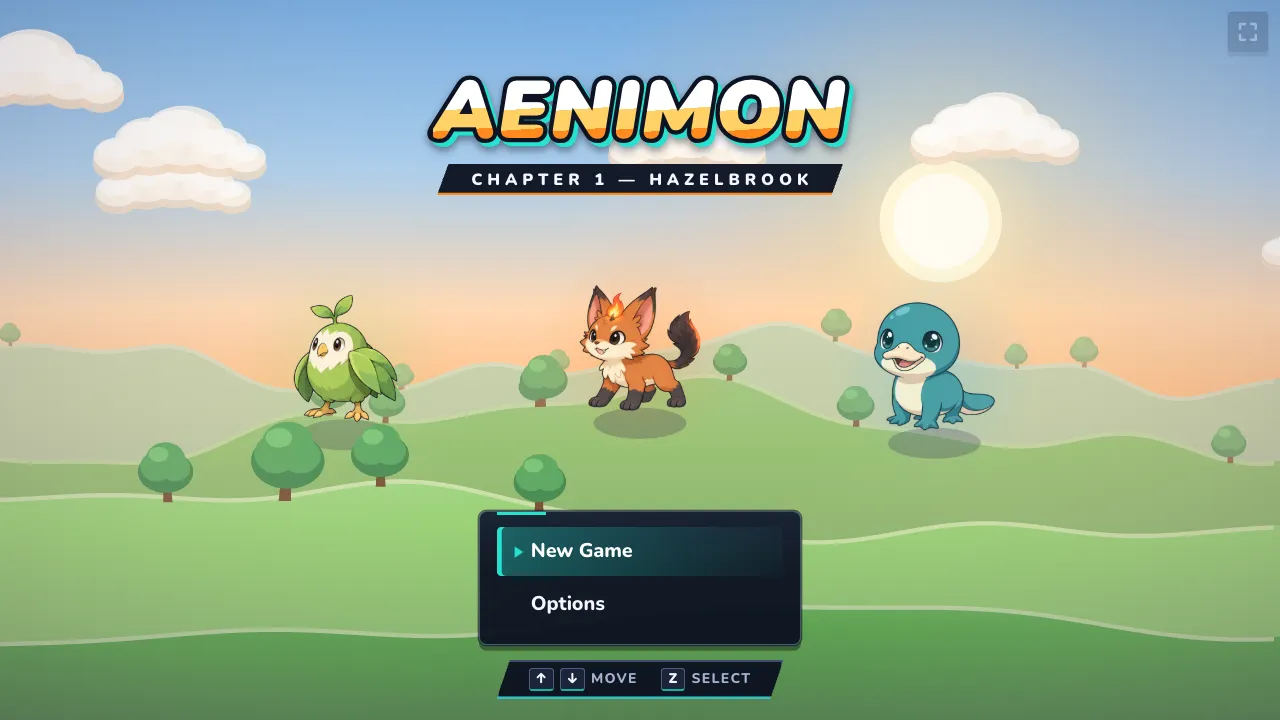
Aenimon is the first one: a creature-collecting RPG. You explore a region, run into Aenimon
(singular = plural), earn their trust and grow with them. Catching is about trust, and how you raise them
decides what they turn into.
It runs in the browser on desktop and phone. Free, no account, no tracking. The whole first arc is playable
now, start to finish.
Your save lives in your browser. Handy, but browsers forget stuff (cleared data, a new phone, private mode).
So back it up once in a while. Save in-game first, then open Options:
Share Save sends the save file wherever you like: your notes, a chat with yourself, your mail;
Save Link turns your whole save into a link (and a QR code for early saves). Open it on any device and you're back where you were;
Import Save loads a save file. The save that's on the device gets backed up first.
Already have a save file? Open the game, pick Options on the title screen and choose Import Save.
The save link keeps your save after the # in the URL, so it never hits a server. It does mean anyone with the link can load a copy, so maybe don't post it publicly.
Updates (2)
· latest
Aenimon: arc 1 is complete
Big update! The whole first arc is playable now, from Hazelbrook all the way to the end: nine gyms, the factions, the storm and the long night under the shelf. And as of today it has a proper ending.
What changed since the first build:
arc 1 is finished, with a new last chapter (no spoilers, you’ll know it when you get there);
the first time you reach a town, it shows you a short scene of the people who live there;
field skills (Clear, Dig, Heave, Glow and Ride) are now moves your partners learn from Field Cards. They take a battle slot, and a partner needs the right type and enough strength or size to learn one;
a Field Guide in Options explains how things work, without telling you where to go;
you can trade with other players by post, run into other players’ teams as Wanderers, and keep your save in the cloud;
shops and move menus show what an item or move actually does;
moves have their own sounds now, and the world has a bit more life: flowing water, reeds that sway as you pass, people going about their day;
new music for every new place.
Next up: arc 2.
Bugs will happen. Tell me when you find one :)
Aenimon: first public build
First public build! Chapter one is playable: Hazelbrook, the routes around it and the first bit of the story.
What changed this week:
catching got reworked into a trust system. Every miss makes the next throw a bit more likely, and the game tells you how it’s going;
you can share your save as a file, a link or (for early saves) a QR code;
a lot of creatures got redrawn;
new soundtrack: lo-fi in town, electronic in battles.
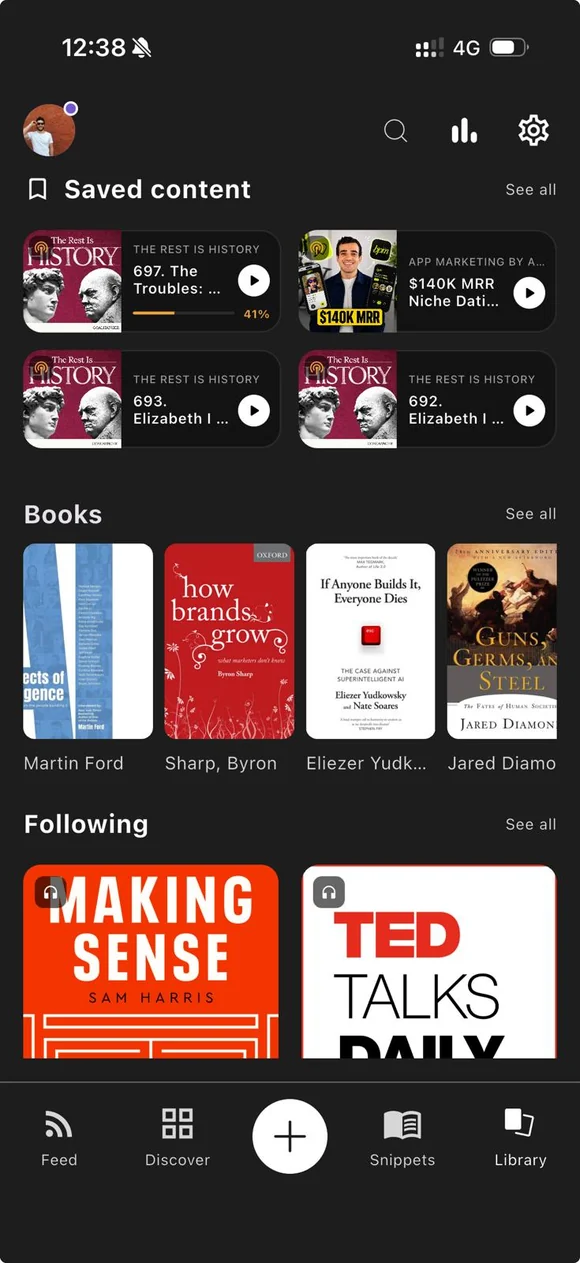
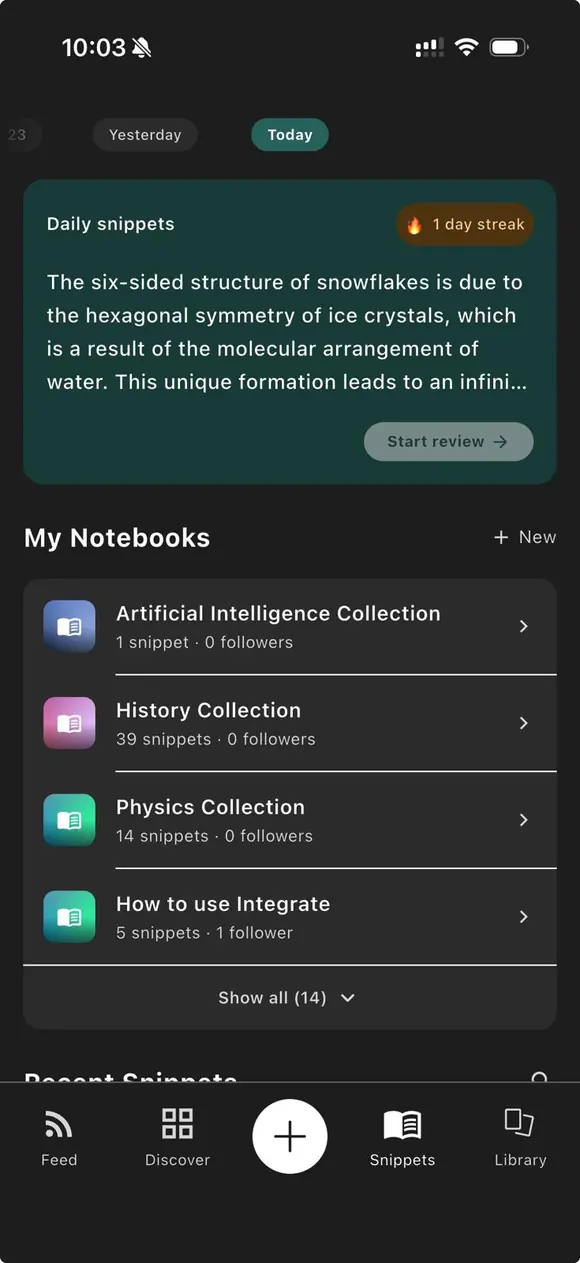
Integrate is a learning app. You save what you read and listen to (books, podcasts,
newsletters, articles, you name it) into one library. The app then shows you a few of your own snippets each
day, spaced so they come back right before you forget them.
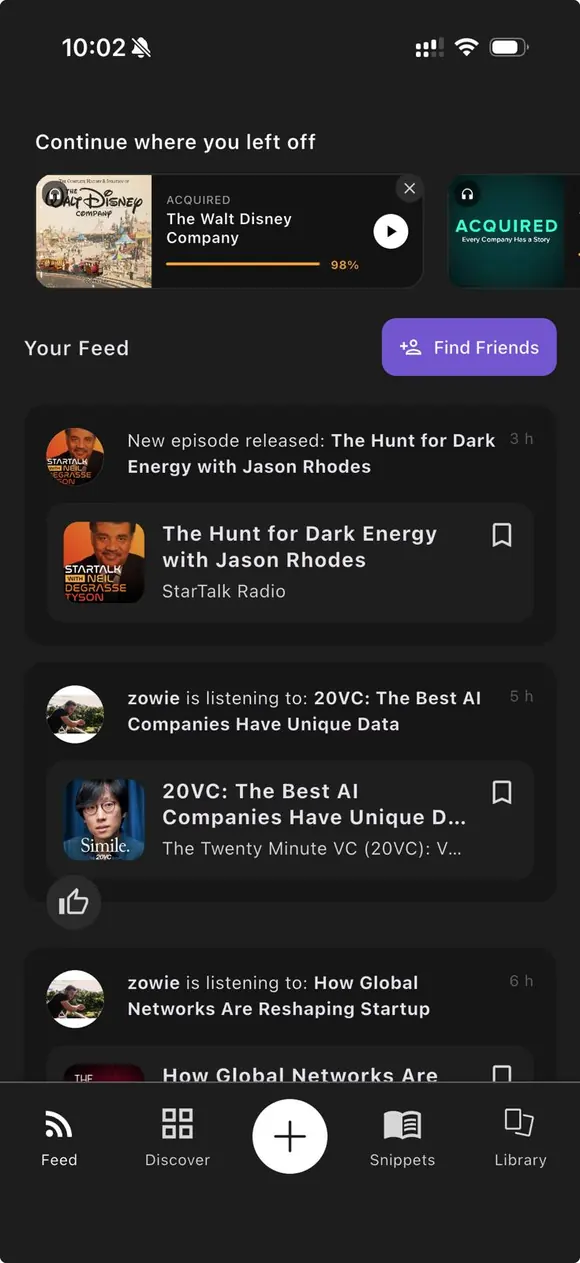
You can also follow people who read what you read, and ask your library a question.
This one isn't just me. I've been slowly building it on the side since 2024, together with Aron Disco and
Jens Maluck. So it's older than the factory. But these days most of the code comes out of the same setup: an
orchestrator, worker agents from different vendors, fresh reviewers, and tests that decide what lands.
Woefje turns your kid's favourite cuddly toy into the hero of their own illustrated
storybook. You upload a photo of the toy, answer a few questions, and AI writes and illustrates a story
around it.
Then it gets printed as a hardcover in the Netherlands and delivered to your door. Pretty cool to hold
something physical that came out of the factory.
I'm building this one together with Jens Maluck. The site is in Dutch atm.
My dear friend Luuk Stehouwer is a mathematician, and
he's running an experiment: can AI do actual mathematical research? The machines work on real problems, what comes out gets
reviewed, and every paper says what the AI did and where a human stepped in.
I help him with the factory side of it: the setup that keeps research, review and print running. The maths
is his (and the machines').
The factory is running, but the public archive is still empty atm.
Every now and then I send a short update: a new chapter, a new project, something that broke in a fun way.
No spam, and you can unsubscribe whenever you like.
You'll get one mail to confirm first. I only use your address for these updates.
05 / ko-fi
Ko-fi
Tokens cost money. Quite a lot of money, actually. I'd still rather keep the games free, so there's a
Ko-fi. It pays for the factory (tokens, tooling, the next games), not for access. Nothing gets paywalled.